
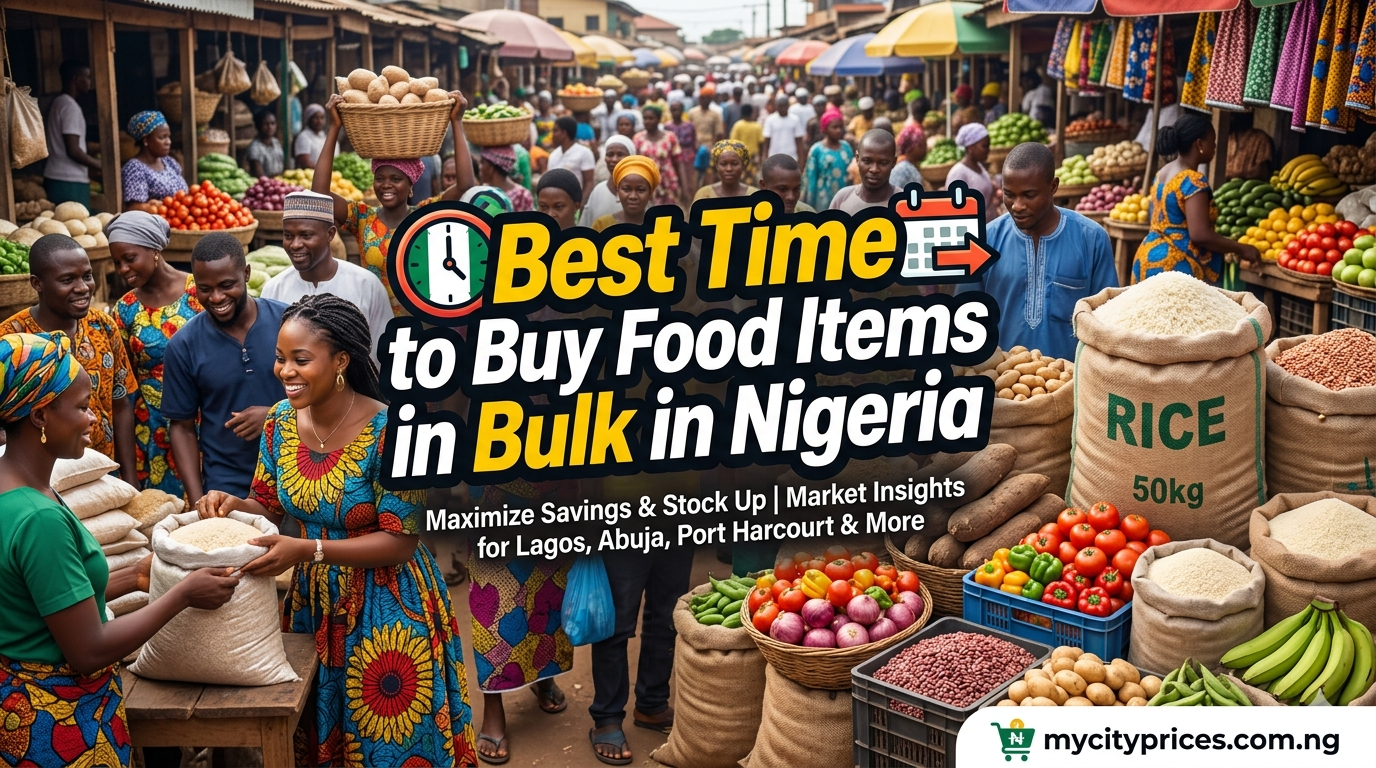
Best Time to Buy Food Items in Bulk in Nigeria (With Market Analysis & Smart Saving Tips)
Buying food in bulk in Nigeria is one of the smartest ways to reduce living costs—especially with rising inflation and unstable market prices. However, bulk buying is not just about purchasing large quantities; it’s about buying at the right time, from the right place, and storing properly.
In this article, you’ll learn the best time to buy food items in bulk in Nigeria, backed by market trends, seasonal analysis, and practical strategies that can help you save thousands of naira monthly.
Why Timing Matters When Buying Food in Bulk
In Nigeria, food prices are highly seasonal. This means prices go up and down at different times of the year depending on:
- Harvest cycles
- Transportation costs
- Inflation
- Demand during festive periods
If you buy at the wrong time, you could spend 30%–50% more on the same food items.
Best Time to Buy Food Items in Bulk in Nigeria
1. Harvest Season (Cheapest Period of the Year)
The best time to buy food in bulk is during the harvest season, when supply is high and prices are at their lowest.
Major Harvest Periods in Nigeria
| Food Item | Best Time to Buy (Harvest Period) |
|---|---|
| Rice | November – January |
| Beans | August – October |
| Yam | July – September |
| Maize (Corn) | August – October |
| Tomatoes & Pepper | December – March (Dry Season) |
| Cassava (Garri) | Year-round (cheaper post-harvest) |
Why Prices Drop During Harvest
- Farmers produce in large quantities
- Supply exceeds demand
- Middlemen reduce prices to sell faster
📌 Example: A bag of rice that sells for ₦80,000 during scarcity may drop to ₦55,000–₦65,000 during harvest.
2. Post-Harvest Period (Smart Buyer Window)
This is the 1–3 months after harvest, and it’s often the best time for experienced buyers.
Why This Period Is Ideal:
- Prices are still low
- Market demand is stable
- Sellers are clearing stock
This is when:
- Families stock up for months
- Traders buy and store for resale
💡 If you miss harvest season, this is your second-best opportunity.
3. Mid-Year Stability (Neutral Period)
Between February and May, prices may appear stable but are slowly increasing.
Should You Buy During This Time?
- Yes, but only if necessary
- Avoid bulk buying unless you see a price drop
Worst Time to Buy Food Items in Bulk
1. Festive Period (December Rush)
This is the most expensive time to buy food in Nigeria.
Why Prices Increase:
- High demand (Christmas & New Year)
- Increased spending
- Hoarding by traders
| Food Item | Price Behavior in December |
|---|---|
| Rice | Very High |
| Chicken | Extremely High |
| Tomatoes | High |
| Pepper | High |
2. Pre-Harvest Scarcity (March – June)
This is when:
- Stored food is running out
- New crops are not ready
Result:
- Prices peak
- Quality may drop
- Bulk buying becomes risky
3. During Fuel or Transport Crises
Nigeria’s food supply heavily depends on transportation.
When fuel prices increase:
- Transport costs rise
- Food prices increase instantly
Market Analysis: Understanding Food Price Trends in Nigeria
To make better bulk buying decisions, you need to understand the key drivers of food prices.
VIEW ALSO : Current Prices of Rice, Beans & Yam in Lagos Markets (March 2026 Update)
1. Seasonality (Primary Factor)
Food prices follow a yearly pattern:
| Period | Price Trend |
|---|---|
| Harvest Season | Low |
| Post-Harvest | Moderate |
| Scarcity Season | High |
This cycle repeats every year.
2. Inflation and Economic Factors
Nigeria has experienced significant food inflation due to:
- Rising fuel prices
- Naira depreciation
- Increased cost of farming
Impact:
- Food becomes less affordable
- Bulk buying becomes more important
3. Transportation Costs
Most food items are transported from Northern Nigeria to Southern cities like Lagos, Benin, and Port Harcourt.
Key Insight:
- The farther the distance, the higher the price
- Urban areas pay more than rural areas
4. Market Location Matters
Buying from major markets can save you a lot.
Popular Bulk Food Markets in Nigeria:
| Market Name | Location | Specialty |
|---|---|---|
| Mile 12 Market | Lagos | Vegetables & fruits |
| Bodija Market | Ibadan | Grains & tubers |
| Dawanau Market | Kano | Bulk grains |
Buying directly from these markets or suppliers can reduce costs by 10%–25%.
5. Supply Chain Disruptions
Factors like:
- Flooding
- Insecurity
- Government policies
can suddenly increase food prices.
Smart Bulk Buying Strategy (Step-by-Step)
If you want to maximize savings, follow this strategy:
Step 1: Focus on Non-Perishable Foods
Best items to buy in bulk:
- Rice
- Beans
- Garri
- Palm oil
- Flour
Step 2: Buy During Harvest or Post-Harvest
Timing is everything. Avoid emotional buying.
Step 3: Store Properly
Poor storage can waste your money.
Storage Tips:
- Use airtight containers
- Keep food in a dry place
- Use preservatives if needed
- Protect from pests
Step 4: Avoid Overbuying Perishables
Only bulk buy perishables if you have:
- Freezer
- Storage plan
Step 5: Track Prices Regularly
Follow price updates from:
- Local markets
- Online platforms like your site
Example Price Comparison (Bulk Buying Impact)
| Food Item | Harvest Price | Scarcity Price | Savings |
|---|---|---|---|
| Rice (50kg) | ₦60,000 | ₦85,000 | ₦25,000 |
| Beans (50kg) | ₦50,000 | ₦75,000 | ₦25,000 |
| Garri (Bag) | ₦25,000 | ₦40,000 | ₦15,000 |
Internal Linking Ideas for Your Website (mycityprices.com.ng)
To improve SEO and AdSense approval, link this article to:
Related Articles You Should Publish:
- “Current Prices of Food Items in Nigeria (Updated Monthly)”
- “How to Survive on ₦100k in Lagos”
- “Cheapest Markets to Buy Food in Nigeria”
- “Monthly Food Budget for Nigerian Families”
- “Price of Rice in Nigeria Today”
Internal Linking Strategy:
- Link keywords like “food prices in Nigeria” to your price pages
- Link “budget tips” to cost-saving articles
- Use anchor text like:
- “Check current food prices here”
- “See latest rice prices in Nigeria”
Pro Tips to Save More Money
- Buy directly from farmers when possible
- Join cooperative buying groups
- Monitor seasonal trends yearly
- Split bulk purchases with friends/family
Final Thoughts
Bulk buying in Nigeria is one of the most effective ways to beat rising food costs—but only if you do it right.
Key Takeaways:
- Buy during harvest or post-harvest periods
- Avoid festive and scarcity seasons
- Focus on non-perishable items
- Store food properly
When done correctly, bulk buying can save you thousands of naira every month and protect you from sudden price increases.
FAQs
1. What is the best month to buy food in bulk in Nigeria?
The best months are typically between August–January, depending on the food item and harvest season.
2. Is bulk buying cheaper in Nigeria?
Yes, bulk buying can save up to 30%–50%, especially during harvest periods.
3. Which food items are best for bulk buying?
Rice, beans, garri, palm oil, and flour are the best due to their long shelf life.
4. Why do food prices increase in Nigeria?
Due to inflation, fuel costs, transportation, and seasonal scarcity.
5. Can I buy tomatoes in bulk?
Yes, but only if you have proper storage like refrigeration or drying methods.
6. Is it better to buy from markets or supermarkets?
Markets are generally cheaper, especially for bulk purchases.
7. How can I store food items for a long time?
Use airtight containers, keep in dry areas, and protect from pests.
8. What is the worst time to buy food in Nigeria?
Festive periods (December) and pre-harvest months (March–June).
9. How do I track food prices in Nigeria?
Follow reliable price platforms like your website and local market updates.
10. Can bulk buying help during inflation?
Yes, it protects you from future price increases and helps you budget better.

Leave a Reply