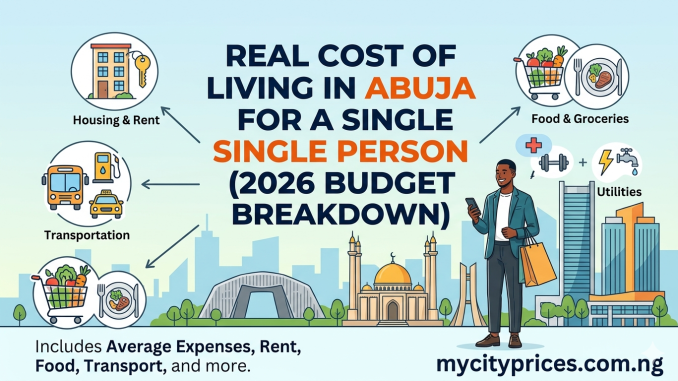
Real Cost of Living in Abuja for a Single Person (2026 Budget Breakdown)
If you’re planning to live in Abuja or you’re already here trying to figure out where your money is going every month, let me be very honest with you — Abuja is not as cheap as people think.
When I first started tracking my expenses properly, I was shocked at how small things were quietly draining my money. It’s not just rent or food. It’s transport, random contributions, subscriptions, and those daily “small small” spending that add up fast.
So in this guide, I’m not giving you guesswork. This is a realistic breakdown based on experience, observation, and current 2026 prices — what it actually costs a single person to live in Abuja comfortably (or at least survive).
🏠 Accommodation (The Biggest Expense)
Let’s start with the one that hits the hardest — rent.
In Abuja, where you live will determine almost everything about your monthly spending.
🏡 Average Rent (Single Person Setup)
- Self-contained (outside town): ₦300,000 – ₦600,000/year
- Self-contained (inside town): ₦700,000 – ₦1.5 million/year
- Shared apartment: ₦400,000 – ₦800,000/year
If you break it down monthly:
👉 You’re looking at roughly ₦30,000 – ₦120,000/month
But here’s what many people don’t tell you 👇
⚠️ Hidden Housing Costs
- Agency fee: 10–20%
- Agreement fee: 10%
- Caution fee: ₦20k – ₦50k
- Service charges (in some areas)
👉 That “₦500k rent” can easily become ₦650k+ upfront
🍛 Feeding (Where Money Disappears Fast)
Food in Abuja is very tricky. You can either:
- Spend wisely and manage
- Or overspend without realizing
🥗 If You Cook at Home
- Monthly foodstuff: ₦40,000 – ₦80,000
🍔 If You Eat Outside Often
- Daily average: ₦2,000 – ₦5,000
- Monthly: ₦60,000 – ₦150,000
From my experience, once you start eating out regularly, your budget will lose control fast.
VIEW ALSO : How Much Are Tomatoes & Peppers Costing in Abuja This Week?
🚗 Transport (Silent Money Drainer)
Transport in Abuja depends heavily on your location and lifestyle.
🚕 Average Daily Transport
- Short distance: ₦500 – ₦1,500
- Longer routes: ₦2,000 – ₦5,000
📅 Monthly Estimate
👉 Around ₦30,000 – ₦80,000
💡 What I Noticed Personally
- Prices change almost every week
- Fuel scarcity = instant transport increase
- Bolt/Uber can quietly drain ₦100k+ monthly if you’re not careful
⚡ Utilities (You Must Budget This)
This is another area people underestimate.
🔌 Electricity
- ₦10,000 – ₦30,000/month (depending on usage)
💧 Water
- ₦2,000 – ₦5,000
📶 Internet & Data
- ₦10,000 – ₦25,000
🧹 Other small bills
- Security / sanitation: ₦2,000 – ₦10,000
👉 Total utilities: ₦25,000 – ₦70,000/month
🧍 Personal Spending (The Hidden Killer)
This is where most people lose money without tracking.
Examples:
- Subscriptions (Netflix, Spotify): ₦5,000 – ₦15,000
- Hanging out: ₦10,000 – ₦50,000
- Random spending: ₦10,000 – ₦40,000
👉 Monthly total: ₦20,000 – ₦100,000+
And trust me, this part is very easy to underestimate.
🏥 Health & Emergencies
Even if you don’t fall sick, you should budget something.
- Drugs / pharmacy: ₦5,000 – ₦15,000
- Clinic visits: ₦10,000+
👉 Safe monthly budget: ₦10,000 – ₦30,000
📊 FULL MONTHLY BUDGET BREAKDOWN (REALISTIC)
🟢 Low Budget (Managing Level)
- Rent (monthly): ₦30,000
- Food: ₦40,000
- Transport: ₦30,000
- Utilities: ₦25,000
- Personal: ₦20,000
👉 Total: ~₦145,000/month
🟡 متوسط Budget (Comfortable Living)
- Rent: ₦70,000
- Food: ₦70,000
- Transport: ₦50,000
- Utilities: ₦40,000
- Personal: ₦50,000
👉 Total: ~₦280,000/month
🔴 High Budget (Soft Life)
- Rent: ₦120,000+
- Food: ₦120,000
- Transport: ₦80,000
- Utilities: ₦70,000
- Personal: ₦100,000+
👉 Total: ₦450,000 – ₦600,000/month
💡 Things Nobody Tells You About Living in Abuja
Let me be real with you — these are things I personally noticed:
1. Small Spending Is the Real Problem
You won’t go broke from rent.
You’ll go broke from:
- Daily snacks
- Transport
- “Just one drink” outings
2. Location Can Save or Destroy Your Budget
Living far from town:
- Cheaper rent
- Higher transport
Living inside town:
- Expensive rent
- Lower transport
👉 You must balance it.
3. Abuja Lifestyle Is Expensive If You Follow People
If you try to “keep up”:
- Lounges
- Constant outings
- Ride-hailing apps
👉 Your money will disappear fast.
💸 How to Reduce Your Cost of Living (Real Tips)
From experience, these are what actually work:
✅ Cook More
You can cut your food budget by almost 50%
✅ Reduce Ride-Hailing
Use keke/bus when possible
✅ Plan Your Week
Unplanned movement = more spending
✅ Track Your Expenses
Once I started tracking, I realized:
I was wasting more than I thought
❓ Frequently Asked Questions
Is Abuja more expensive than Lagos?
It depends on lifestyle, but Abuja can be more expensive in housing and transport.
Can you live in Abuja with ₦100k monthly?
Honestly, it will be very difficult unless:
- You already have free accommodation
- You live extremely low-budget
What is a comfortable salary in Abuja?
👉 From experience: ₦250k – ₦400k/month gives a decent lifestyle
🧾 Final Verdict (Honest Truth)
Living in Abuja as a single person in 2026 is not cheap.
👉 Minimum survival: ₦140k – ₦180k/month
👉 Comfortable living: ₦250k – ₦400k/month
👉 Soft life: ₦450k+
The biggest lesson I learned?
It’s not how much you earn — it’s how you manage your spending.
Because in Abuja, money can disappear quietly if you’re not paying attention.
Leave a Reply