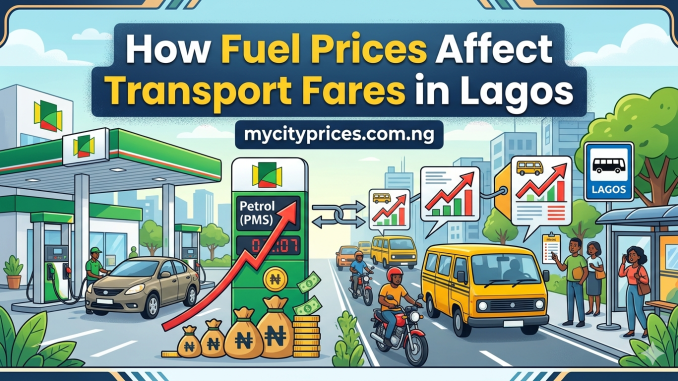
How Fuel Prices Affect Transport Fares in Lagos (From Someone Who Has Felt It Firsthand)
If you’ve never lived in Lagos, you might think transport pricing is straightforward — distance + vehicle = fixed price.
But if you actually move around Lagos every day, you’ll quickly realize something:
Fuel price controls everything.
And I don’t mean in a small way. I mean in a way that can completely destroy your daily budget overnight.
I’ve experienced this personally — waking up one morning, stepping out with the same money I used the day before, only to find out that transport fare has doubled… just like that.
No warning. No explanation. Just “fuel don cost.”
Let me break it down the way it really works, based on real-life experience.
The Day Everything Changes: Fuel Price Goes Up
There’s a pattern I’ve noticed in Lagos.
The moment fuel price increases, everything reacts almost immediately.
You’ll start hearing things like:
- “₦200 don turn ₦400”
- “No change, na fuel”
- “If you no go pay, come down”
And the crazy part?
This doesn’t take weeks. Sometimes it happens within hours.
I remember one time, I boarded a bus in the morning for ₦300. Same route, same distance.
By evening?
₦500.
Same road. Same traffic. Same everything.
The only difference was fuel.
Why Transport Fares Change So Fast in Lagos
In other countries, transport prices are more regulated.
In Lagos?
It’s survival.
Most drivers you see — especially danfo and keke drivers — are not working under strict government pricing systems. They’re reacting in real time to:
- Fuel cost
- Daily income target
- Traffic conditions
- Vehicle maintenance
So when fuel increases, they don’t wait.
They adjust instantly.
Real Price Changes I’ve Experienced
Let me show you how real this gets.
🧾 Screenshot-Style Example (Before vs After Fuel Hike)
Route: Ikorodu → CMS
Before fuel increase:
- Bus (danfo): ₦500
- Keke (short distance): ₦150
- Bolt ride: ₦3,500
After fuel increase:
- Bus (danfo): ₦800 – ₦1,000
- Keke: ₦300
- Bolt ride: ₦5,500 – ₦7,000
👉 That’s not a small increase. That’s almost double.
And this didn’t happen over months.
It happened within days.
Danfo Drivers Don’t Joke With Fuel Prices
If you use danfo regularly, you already know this.
Danfo drivers are the first to react to fuel changes.
Once fuel price goes up:
- Fares increase immediately
- Stops are reduced (to save fuel)
- Drivers rush more trips per day
Sometimes, they even create unofficial new pricing like:
- “Short distance = ₦200” (used to be ₦100)
- “Last bus = higher fare”
And arguing with them?
Almost useless.
Because their reply is always the same:
“Go buy fuel na.”
Keke and Okada — Small Distance, Big Price Jump
You would think short-distance transport would remain stable.
It doesn’t.
Keke and okada riders adjust even faster than buses.
Why?
Because:
- They buy fuel daily
- Their profit margin is smaller
- Any increase affects them instantly
So that quick ₦100 ride you’re used to?
It can become ₦300 overnight.
And you’ll still pay it — because you don’t have a choice.
VIEW ALSO : Average 1-Bedroom Rent: Lagos Island vs Mainland (Latest Figures)
Ride-Hailing Apps Will Humble You
Apps like Bolt and Uber used to feel like a “stable option.”
Not anymore.
Fuel price + Lagos demand = chaos pricing.
I’ve seen situations where:
- Normal trip: ₦2,500
- Same trip, same time next day: ₦4,800
- Rainy day + fuel increase: ₦7,000+
And you’ll open the app thinking it’s a mistake.
It’s not.
It’s “surge pricing” mixed with fuel cost.
Traffic Makes It Worse (Way Worse)
Fuel price alone is bad.
Now combine it with Lagos traffic.
Drivers are spending:
- More time on the road
- More fuel per trip
- Fewer completed trips per day
So what do they do?
They increase fares to compensate.
That’s why a 30-minute journey can suddenly cost as much as a 1-hour trip used to.
Daily Budget Becomes Unpredictable
This is where it really affects your life.
If you’re someone that moves daily:
- Work
- Business
- School
You can’t fix a stable transport budget.
Let’s say you plan:
- ₦1,000 per day for transport
After fuel increase?
- ₦1,800 – ₦2,500
That’s almost double your monthly transport cost.
And nothing else in your life adjusts to match it.
Your salary stays the same.
Hidden Effect: Everything Else Becomes Expensive
Here’s something many people don’t realize immediately.
Fuel price doesn’t just affect transport.
It affects:
- Food prices
- Delivery costs
- Market goods
- Even rent (long-term)
Because everything in Lagos depends on transportation.
So when transport becomes expensive:
👉 The cost of living rises completely.
Market Women Adjust Prices Fast
After a fuel increase, go to the market within a week.
You’ll notice:
- Tomatoes more expensive
- Rice price increased
- Pepper suddenly “scarce”
Why?
Transport cost from farms to market has increased.
So traders transfer that cost to you.
VIEW ALSO : What are common jobs for women in Nigeria?
Salary vs Transport Reality
This is the painful part.
Most people’s income does not increase when fuel price increases.
So what happens?
- More money goes into transport
- Less money for savings
- Less money for food
- More financial pressure
I’ve had months where transport alone was taking a huge chunk of my income, and it honestly didn’t make sense.
How People Are Coping (Real Strategies)
From what I’ve seen and experienced, people are adjusting in different ways:
1. Reducing Movement
People now:
- Avoid unnecessary outings
- Combine multiple trips into one
2. Trekking More
Distances you would never trek before?
People are trekking now.
Because saving ₦200–₦500 per trip adds up.
3. Switching Routes
Some people now:
- Take longer but cheaper routes
- Avoid direct transport
4. Carpooling
Friends and colleagues now:
- Share rides
- Split fuel cost
5. Remote Work (If Possible)
Some people are trying to:
- Work from home
- Reduce daily transport completely
Screenshot-Style Monthly Impact
Let me show you how this affects real life monthly:
Before fuel increase:
- Daily transport: ₦1,000
- Monthly (20 working days): ₦20,000
After fuel increase:
- Daily transport: ₦2,000
- Monthly: ₦40,000
👉 Extra ₦20,000 gone… just like that.
And that money has to come from somewhere.
The Emotional Side Nobody Talks About
It’s not just money.
It’s stress.
- Standing in bus stops longer
- Arguing with drivers
- Watching prices change daily
- Constant uncertainty
It drains you mentally.
Because you can’t predict anything anymore.
Final Truth (From Experience)
Fuel price in Lagos is not just an economic issue.
It’s a daily survival factor.
It affects:
- How you move
- How much you spend
- How often you go out
- Even your quality of life
And the hardest part?
You don’t control it.
If You Live in Lagos, You Already Know
You don’t need statistics to understand this.
If you’ve ever:
- Argued with a driver over fare
- Checked your wallet twice before entering a bus
- Cancelled a trip because of price
Then you already know the reality.
Final Advice (Realistic, Not Motivational)
If you’re living in Lagos right now:
- Always budget extra for transport
- Expect prices to change anytime
- Reduce unnecessary movement
- And if possible, increase your income
Because one thing is certain:
Fuel prices will keep changing… and transport fares will follow immediately.
Leave a Reply