
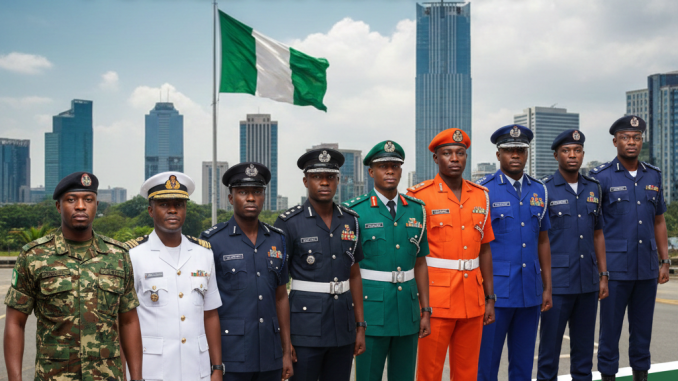
Highest Paid Forces in Nigeria
Nigeria is a nation with numerous security forces tasked with maintaining peace, protecting citizens, and securing the nation’s borders. These forces play essential roles in law enforcement, national defense, intelligence, and civil protection. One question that often arises among job seekers, security professionals, and the general public is:
➡️ Which Nigerian security forces are the highest paid?
In this complete guide, we explore the Top 10 Highest Paid Forces in Nigeria, breaking down salary expectations, rank structures, benefits, and what makes each force attractive for career aspirants. We also explain the factors that influence pay and how income compares across forces.
Why Salary Matters in Nigerian Security Forces
Before listing the top earners, it’s important to understand why salaries in security forces vary:
1. Rank and Experience
Higher rank equals higher salary. A Lieutenant earns more than a Corporal, just as a Deputy Inspector General of Police earns more than an Assistant Superintendent.
2. Operational Risk
Forces deployed in high-risk zones (e.g., Boko Haram regions) sometimes receive hazard/pay allowances.
3. Technical and Specialist Roles
Positions requiring special skills — like intelligence analysis, aviation, cyber security, and logistics — often attract larger pay packets.
4. Government Policies
Salaries and allowances can change with government wage reforms, new budget allocations, and policy adjustments.
5. Allowances
Benefits like hazard pay, housing, feeding, clothing, and health insurance significantly boost total compensation.
Top 10 Highest Paid Forces in Nigeria (2025)
Here’s a detailed look at the highest paid security and military forces in Nigeria, ranked by average income including salaries and allowances.
1. Nigerian Army (NA)
Overview:
The Nigerian Army is the largest arm of the Armed Forces and plays a central role in national defense, peacekeeping, and internal security.
Why It’s Top Paid:
- Large hierarchical structure with many rank tiers.
- Deployment allowances for operations in conflict zones.
- Specialist units (e.g., artillery, engineering, signals) attract extra pay.
Typical Salary Range:
- Regular Soldier: ₦70,000 – ₦120,000/month
- Lieutenant: ₦250,000 – ₦350,000/month
- Colonel / Senior Officer: ₦500,000 – ₦900,000/month
- Major General and above: ₦900,000 – ₦1,500,000+/month
Additional Benefits:
Housing, clothing, feeding allowances, hazard pay, medical care, pension.
2. Nigerian Air Force (NAF)
Overview:
The Nigerian Air Force is responsible for aerial defense and providing air support to other services.
Why It’s Top Paid:
- Highly technical roles (pilots, engineers, avionics).
- Specialized training and certifications lead to higher pay scales.
Typical Salary Range:
- Aircraft Mechanic / Junior Airman: ₦80,000 – ₦130,000/month
- Pilot / Flight Officer: ₦300,000 – ₦500,000/month
- Wing Commander / Senior Pilot: ₦600,000 – ₦1,200,000/month
Perks:
Flight pay, hazard allowances, accommodation, transport allowances, and comprehensive health benefits.
3. Nigerian Navy (NN)
Overview:
The Nigerian Navy secures the nation’s maritime boundaries, combats piracy, and contributes to international peace operations.
Why It’s Top Paid:
- Naval engineers, ship commanders, and technical specialists have high earning potential.
- Marine operations attract extra operational allowances.
Typical Salary Range:
- Seaman / Sailor: ₦70,000 – ₦120,000/month
- Lieutenant: ₦240,000 – ₦380,000/month
- Commander / Captain: ₦600,000 – ₦1,000,000/month
- Rear Admiral and above: ₦900,000 – ₦1,400,000+/month
Benefits:
Housing, sea duty allowances, hazard pay, subsidized education for children.
4. Nigeria Police Force (NPF)
Overview:
The Nigeria Police Force is the principal law enforcement agency responsible for maintaining law and order and preventing crime.
Why It’s High Paid:
- Large workforce with structured rank advancement.
- Risk and duty tour allowances.
Typical Salary Range:
- Constable: ₦60,000 – ₦100,000/month
- Inspector / ASP: ₦180,000 – ₦300,000/month
- CSP / ACP: ₦350,000 – ₦600,000/month
- Commissioner of Police: ₦700,000 – ₦1,200,000+/month
Allowances Include:
Risk/hazard, accommodation, transport, uniform, and pension.
5. Department of State Services (DSS)
Overview:
The DSS (also known as SSS) is Nigeria’s primary domestic intelligence agency, handling internal security, counter-terrorism, and VIP protection.
Why It’s Well Paid:
- Highly sensitive and technical assignments.
- Positions for analysts, operatives, and strategic officers.
Typical Salary Range:
- Operative / Analyst: ₦200,000 – ₦400,000/month
- Senior Operative: ₦500,000 – ₦800,000/month
- Top Intelligence Officers: ₦900,000 – ₦1,500,000/month
Benefits:
Stealth allowances, confidentiality premiums, housing/motor vehicle support.
6. Nigerian Security and Civil Defence Corps (NSCDC)
Overview:
The NSCDC protects critical infrastructure, mitigates civil disturbances, and supports community security.
Why It’s Competitive:
- Multiple allowances and promotions for training achievements.
- Deployment pay for emergency situations.
Typical Salary Range:
- Corps Member: ₦70,000 – ₦120,000/month
- Inspector: ₦200,000 – ₦350,000/month
- Commandant / Regional Heads: ₦500,000 – ₦900,000/month
Perks:
Hazard and operational allowances, uniform, medical care.
7. Nigerian Immigration Service (NIS)
Overview:
The NIS handles border control, issuance of travel documents, and immigration regulations enforcement.
Why It’s Notable:
- Positions like Intelligence Officers and Border Security Specialists earn higher within the service.
Typical Salary Range:
- Immigration Officer Cadet: ₦60,000 – ₦110,000/month
- Senior Immigration Officers: ₦250,000 – ₦450,000/month
- Assistant Comptroller General: ₦600,000 – ₦950,000/month
Benefits:
Housing, duty allowances, travel incentives.
8. Federal Road Safety Corps (FRSC)
Overview:
The FRSC is tasked with road traffic management, safety regulation, and emergency assistance.
Why It’s Competitive:
- Specialized training for rescue operations, traffic control, and road accident investigations.
Typical Salary Range:
- Corps Member: ₦60,000 – ₦100,000/month
- Assistant Corps Officer: ₦180,000 – ₦350,000/month
- Corps Commander: ₦450,000 – ₦850,000/month
Perks:
Rescue operation, travel allowances, accommodation.
9. Nigerian Customs Service (NCS)
Overview:
The Customs Service controls import/export regulations, collects duties, and protects Nigeria’s economic borders.
Why It’s Attractive:
- Trade facilitation officers and analysts can earn higher wages, especially with promotions.
Typical Salary Range:
- Customs Assistant: ₦60,000 – ₦100,000/month
- Inspectors / Enforcement Officers: ₦200,000 – ₦400,000/month
- Deputy Comptroller General: ₦700,000 – ₦1,200,000/month
Benefits:
Duty pay, performance bonuses, housing, and uniform allowances.
10. Nigerian Prisons Service (NPS) / Correctional Service
Overview:
The Correctional Service manages custody, rehabilitation, and reintegration of offenders. It’s often listed among the higher paid institutional forces due to recent reforms and professionalization.
Why It’s on the List:
- Professional ranks with clear upward mobility.
- Training, rehabilitation, and correction roles attract extra allowances.
Typical Salary Range:
- Assistant Superintendent: ₦180,000 – ₦350,000/month
- Senior Superintendent: ₦350,000 – ₦600,000/month
- Controller General / Top Ranks: ₦700,000 – ₦1,100,000+/month
Perks:
Rehabilitation allowances, housing support, hazard pay.
VIEW ALSO : How much is the salary of an EFCC?
How Salaries Are Structured in Nigerian Forces
Security force compensation usually includes:
1. Basic Salary
This is the fixed monthly income aligned with rank.
2. Allowances
These can boost total earnings significantly:
- Housing allowance
- Feeding and Clothing allowance
- Hazard / Operational allowance
- Travel or Deployment allowances
3. Pension & Retirement Benefits
Most forces include pension schemes or gratuity at retirement.
4. Health Insurance
Many forces offer medical coverage for personnel and dependents.
5. Promotions
Rank advancements — especially to senior levels — come with exponential salary increases.
Factors That Influence High Pay in Certain Forces
1. Technical Requirements
Forces like the Nigerian Air Force demand specialized skills, making them more competitive.
2. Operational Risk
Deployments in high-risk regions usually attract extra allowances.
3. Educational Requirements
Advanced degrees or certifications (e.g., cyber security, avionics) increase pay.
4. Rank Structure
Some forces have more extensive rank hierarchies, which allow for higher senior salaries.
5. Government Budgetary Allocations
Annual budgets influence salary reviews and pay increases.
Comparing Pay Across Forces
Here is a simplified comparison:
| Force | Typical Monthly Earnings | Highest Ranks |
|---|---|---|
| Nigerian Army | ₦70K – ₦1.5M+ | Yes |
| Nigerian Air Force | ₦80K – ₦1.2M+ | Yes |
| Nigerian Navy | ₦70K – ₦1.4M+ | Yes |
| Nigeria Police | ₦60K – ₦1.2M+ | Yes |
| DSS | ₦200K – ₦1.5M+ | Yes |
| NSCDC | ₦70K – ₦900K | Yes |
| Immigration Service | ₦60K – ₦950K | Yes |
| FRSC | ₦60K – ₦850K | Yes |
| Customs Service | ₦60K – ₦1.2M | Yes |
| Prisons / Correctional | ₦180K – ₦1.1M | Yes |
Note: Salaries above represent broad estimates and actual figures depend on rank, allowances, and government salary adjustments.
Why Career in Security Forces Can Be Rewarding
Choosing a security force as a career offers more than just monthly pay:
1. Job Stability
Force careers are government or quasi-government roles with retirement benefits.
2. Career Progression
Rank promotions come with higher salaries and leadership responsibilities.
3. Training and Skills
Personnel often receive free training and certifications.
4. Housing and Medical Benefits
Many forces provide or subsidize housing and medical treatment.
5. Respect and National Service
Serving in national defense and safety carries social respect and pride.
Challenges to Consider
Security force careers also have challenges:
- Risk of injury or danger
- Demanding working hours
- Deployment away from home
- Stressful environments
- Strict discipline
These realities make allowances and hazard pay important parts of total compensation.
Frequently Asked Questions (FAQs)
**1. Which Nigerian force pays the highest salary?
The Nigerian Army and DSS are among the highest paid when combining salary, allowances, and rank advantages, especially at senior levels.
**2. Do Nigerian Police Officers earn as much as military personnel?
Police officers earn competitive salaries, but specialized military roles (e.g., senior Air Force or Army engineers) can earn more due to technical demands and hazard allowances.
**3. Are allowances included in the salary figures?
Allowances are not part of the basic salary but significantly increase total take-home pay for forces.
**4. Which force offers the best career progression?
Forces like the Army, Navy, and Air Force have extensive rank structures, allowing for higher earning potential over time.
**5. Do security forces offer pension and health benefits?
Yes, most Nigerian forces provide pensions, medical coverage, and other post-retirement benefits as part of comprehensive compensation packages.

Leave a Reply