
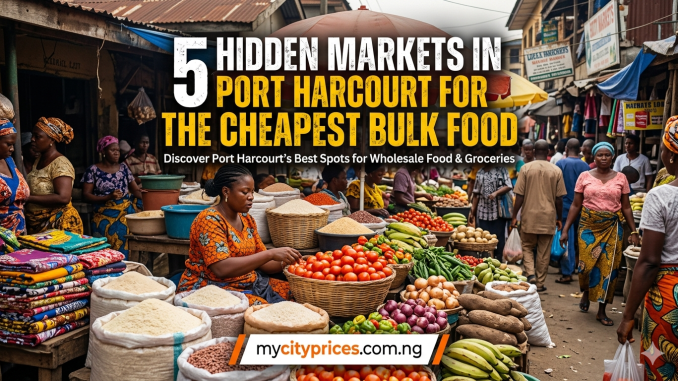
5 Hidden Markets in Port Harcourt for the Cheapest Bulk Food
If you’ve ever bought foodstuff in Port Harcourt, you already know one thing: prices are not the same everywhere. Two markets can be just a few kilometers apart, yet one sells rice, beans, or palm oil significantly cheaper than the other. The difference often comes down to where wholesalers offload, who controls the supply chain, and how competitive the traders are.
After digging into local trade patterns, transport routes, and even price studies across markets in the city, one thing becomes clear: the cheapest food in Port Harcourt is rarely found in the “popular” places. It’s hidden in specific zones, mid-week markets, and trader-controlled clusters.
Here are 5 hidden markets (and sections) in Port Harcourt where bulk buyers consistently get the lowest prices.
1. Oil Mill Market – The Midweek Wholesale Goldmine
If you ask serious bulk buyers in Port Harcourt where they go for the cheapest food, Oil Mill Market will always come up first.
Located around Eleme Junction, this market is not just big — it’s strategically important. It acts as a meeting point for traders coming from Aba, Onitsha, and other major supply hubs.
What makes it special is its Wednesday market day. On that day, traders flood the area, and competition becomes intense.
That competition is exactly why prices drop.
- Bulk rice, beans, and garri are cheaper here than most markets
- Palm oil prices are often lower compared to central markets
- You can buy directly from wholesalers unloading trucks
In fact, a 2026 study comparing food prices across major markets in the city found that Oil Mill had the lowest average palm oil price among key markets.
Insider tip:
Go very early (6–8 AM) on Wednesdays. That’s when trucks are still offloading and prices are at their lowest before middlemen step in.
VIEW ALSO : Average Salaries in Lagos Vs Abuja Vs Porth Harcourt
2. Creek Road Market (Yam Zone) – The Bulk Yam & Northern Supply Hub
Most people know Creek Road Market, but very few understand how powerful its “yam zone” is for bulk food buying.
This section is controlled largely by northern traders and is considered the biggest yam distribution hub in Rivers State.
Why this matters:
- Yams come directly from Benue, Nasarawa, and Plateau
- Fewer middlemen = lower prices
- Bulk buyers (restaurants, resellers) dominate here
But it’s not just yam.
You’ll also find:
- Onions, beans, and dried pepper at lower rates
- Bulk grains sold in wholesale measurements
- Better deals when buying in quantity
Hidden advantage:
Because this market supplies other smaller traders, prices here are often slightly lower than what you’ll find in neighborhood markets.
3. Town Market, Creek Road – Cheapest Mixed Food Basket Market
Right along Creek Road sits another powerful but underrated spot — Town Market.
This market is chaotic, crowded, and honestly not the most organized — but that’s exactly why it’s cheap.
- You can buy multiple food items in one place at bulk-friendly prices
- Sections like “Aba line” and “dry fish/crayfish zone” offer serious deals
- Traders sell in flexible quantities (great for semi-bulk buyers)
Shoppers consistently report that:
- Prices are lower when buying multiple cups or baskets
- Food items like pepper, rice, and beans are cheaper in grouped deals
Real advantage:
Unlike Oil Mill (which is best for full wholesale), Town Market is perfect if you want bulk-like prices without buying full bags.
4. Mile 1 Market (Hidden Wholesale Sections) – The Underrated Competitor
Mile 1 Market is popular, but most people only see the retail front. The real secret lies inside.
Deep within the market are wholesale clusters where traders sell directly to resellers:
- Palm oil dealers
- Rice and grain warehouses
- Frozen food bulk sellers
Research comparing major Port Harcourt markets shows that Mile 1 competes closely with Oil Mill and Creek Road in pricing, especially for items like palm oil.
However, here’s the trick:
👉 Prices vary heavily depending on where you buy inside the market.
- Front stalls = higher prices
- Inner sections = wholesale rates
Insider tip:
Ask specifically for “where they sell in bags” — that’s where the real deals are.
5. Rumuokoro & Surrounding Satellite Markets – The Quiet Price Advantage
Around Rumuokoro axis (close to Oil Mill), there are smaller “satellite markets” that many people ignore.
These markets:
- Receive spillover goods from Oil Mill traders
- Sell items that didn’t finish on major market days
- Offer slightly discounted prices to clear stock
Because they are less crowded and less commercial:
- Prices can be negotiable
- Traders are more willing to reduce prices for bulk buyers
Also, proximity to Oil Mill means they benefit from the same supply chain but with less competition pressure on buyers.
Why These Markets Are Cheaper (Real Insight Most Blogs Miss)
After analyzing how these markets operate, a clear pattern emerges.
1. Proximity to Supply Sources
Markets like Oil Mill and Creek Road are closer to major supply routes, so transport costs are lower — and that directly affects prices.
2. High Trader Competition
On market days (especially Oil Mill Wednesdays), hundreds of traders compete for buyers.
More competition = lower prices.
3. Bulk Buyer Dominance
Markets like Creek Road are built around wholesale buyers, not everyday consumers.
This naturally keeps prices lower.
4. Reduced Middlemen
The closer you are to where goods are offloaded, the fewer middlemen — and the cheaper the food.
Final Thoughts: Where You Should Go Depending on Your Budget
- For the absolute cheapest bulk food:
→ Go to Oil Mill Market on Wednesday - For yam and northern foodstuff in bulk:
→ Creek Road (Yam Zone) - For mixed food items at semi-bulk prices:
→ Town Market, Creek Road - For hidden wholesale deals inside a big market:
→ Mile 1 Market - For quiet bargaining and leftover deals:
→ Rumuokoro satellite markets
💡 Simple strategy smart buyers use:
Many experienced traders don’t rely on one market.
They:
- Buy grains at Oil Mill
- Get yam from Creek Road
- Pick seafood and condiments from Town Market
That combination alone can cut food costs by 15–30% compared to buying everything in one place.

Leave a Reply