
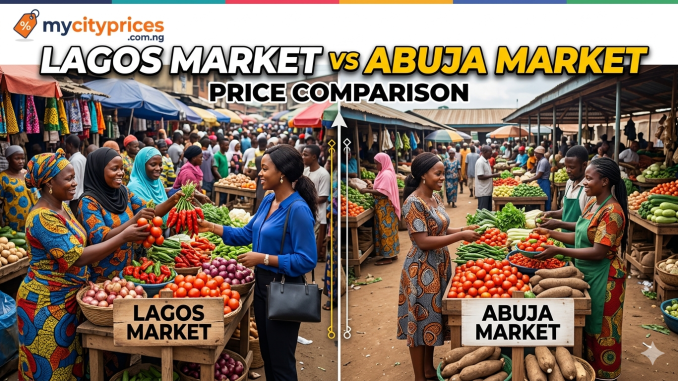
Lagos Market vs Abuja Market Price Comparison (2026 Full Guide)
When it comes to the cost of living in Nigeria, two cities always come up in conversation: Lagos and Abuja. Both are major economic hubs, but when you step into their markets, you’ll quickly notice differences in food prices, availability, and buying patterns.
So, which city is cheaper?
👉 Lagos markets or Abuja markets?
This detailed comparison will break it down using real-life context, price trends, and insights gathered from major markets like Mile 12 Market, Oyingbo Market, and Wuse Market.
📊 Overview: Lagos vs Abuja Market System
Before comparing prices, it’s important to understand how both cities operate.
Lagos Markets
Lagos is a coastal commercial hub with direct access to ports and major food supply routes.
- Large wholesale markets (Mile 12, Oyingbo)
- High competition among traders
- Faster turnover of goods
👉 Result: Prices can be lower and more flexible
Abuja Markets
Abuja is landlocked and depends heavily on supplies from:
- Northern Nigeria (grains, livestock)
- Middle Belt (vegetables, yam)
- Lagos (imported goods)
👉 Result: Higher transport costs = higher prices
📉 Why Prices Differ Between Lagos and Abuja
1. Transportation Costs
Food items transported to Abuja travel longer distances.
- Fuel price increases affect Abuja more
- Logistics costs raise final market prices
👉 Lagos benefits from port access and shorter supply chains.
2. Supply and Demand
Lagos has:
- More traders
- More competition
- Larger markets
Abuja has:
- Fewer wholesale hubs
- Higher demand from civil servants and expatriates
👉 This pushes Abuja prices higher.
3. Population Pressure
Lagos has a larger population, but also:
- More informal markets
- Street vendors
- Price bargaining culture
Abuja is more structured, and prices are often less negotiable.
🍚 Food Price Comparison (Lagos vs Abuja)
Below is a realistic comparison of common food items based on market observations.
🍅 Tomatoes (Basket)
- Lagos (Mile 12 Market): ₦25,000 – ₦40,000
- Abuja (Wuse Market): ₦35,000 – ₦55,000
👉 Why?
Tomatoes come mostly from the North. Abuja is closer but lacks the large-scale wholesale competition Lagos has.
🍚 Rice (50kg Bag)
- Lagos: ₦65,000 – ₦80,000
- Abuja: ₦70,000 – ₦85,000
👉 Lagos sometimes gets cheaper imported rice through ports.
🥔 Yam (Per Tuber)
- Lagos: ₦2,000 – ₦4,000
- Abuja: ₦2,500 – ₦5,000
👉 Yams originate from the Middle Belt, but Lagos bulk buying reduces cost.
🥬 Vegetables (Ugu/Spinach)
- Lagos (Oyingbo Market): ₦300 – ₦800 per bunch
- Abuja: ₦500 – ₦1,000 per bunch
👉 Transport and freshness cycles affect Abuja pricing.
🍗 Chicken (Frozen)
- Lagos: ₦8,000 – ₦12,000
- Abuja: ₦9,000 – ₦13,000
👉 Lagos has better access to imported frozen foods.
📈 Price Trends: Now vs Previous Years
2019–2021
- Lagos and Abuja prices were closer
- Differences were minimal
2022–2024
- Inflation increased nationwide
- Abuja became noticeably more expensive
2025–2026
- Fuel price increases widened the gap
- Abuja prices rose faster due to transport costs
👉 Today, Lagos markets are generally 5%–20% cheaper than Abuja.
🛒 Market Behavior Differences
In Lagos
- Prices change daily
- Bargaining is expected
- Bulk buying reduces cost significantly
In Abuja
- Prices are more fixed
- Less aggressive bargaining
- Smaller markets = less flexibility
💰 Cost of Feeding: Lagos vs Abuja
Monthly Food Budget (Single Person)
| City | Estimated Monthly Food Cost |
|---|---|
| Lagos | ₦30,000 – ₦60,000 |
| Abuja | ₦40,000 – ₦80,000 |
👉 Abuja is clearly more expensive when it comes to feeding.
📍 Real Market Insights
From Mile 12 Market (Lagos)
- Bulk buyers get cheaper rates
- Prices fluctuate based on supply trucks
- Evening purchases are cheaper
From Wuse Market (Abuja)
- Prices are more stable but higher
- Retail buying dominates
- Less bulk advantage
⚖ Which City Is Cheaper Overall?
👉 Lagos is generally cheaper than Abuja for food items
But there’s a twist:
- Lagos transport cost can be higher due to traffic
- Abuja has better road networks but higher food prices
🧠 Smart Shopping Tips (For Both Cities)
✔ Buy from Wholesale Markets
Markets like Mile 12 and Oyingbo offer lower prices than supermarkets.
✔ Buy Seasonal Foods
Prices drop when items are in season.
✔ Go Early or Late
- Early morning = fresh stock
- Late evening = cheaper prices
✔ Avoid Supermarkets
Supermarkets in both cities are significantly more expensive.
✔ Buy in Bulk
Especially in Lagos, bulk buying reduces cost.
📉 Hidden Cost Factors People Ignore
1. Food Waste
Buying too much without storage leads to losses.
2. Transport to Market
Sometimes transport cost cancels out savings.
3. Time
Lagos markets may be cheaper, but they require time and effort.
VIEW ALSO : 5 Hidden Markets in Port Harcourt for the Cheapest Bulk Food
📊 Lagos vs Abuja: Final Comparison Table
| Factor | Lagos | Abuja |
|---|---|---|
| Food Prices | Cheaper | More Expensive |
| Transport Cost | High (traffic) | Moderate |
| Bargaining | Strong | Limited |
| Market Size | Very Large | Moderate |
| Bulk Buying | Advantage | Limited |
📍 Final Verdict
- Lagos markets are generally cheaper due to competition and port access
- Abuja markets are more expensive due to logistics and supply chain costs
- The price gap has widened since fuel price increases
- Smart shopping can reduce costs significantly in both cities
👉 If your goal is to save money on food, Lagos has the advantage.
❓ Frequently Asked Questions (FAQs)
Which city has cheaper food, Lagos or Abuja?
Lagos generally has cheaper food due to larger markets, competition, and better access to imports.
Why is Abuja more expensive than Lagos?
Higher transportation costs, limited wholesale markets, and supply chain logistics make Abuja more expensive.
Which market is the cheapest in Lagos?
Mile 12 Market and Oyingbo Market are among the cheapest for bulk food purchases.
Can you bargain in Abuja markets?
Yes, but bargaining is less aggressive compared to Lagos markets.
Is it cheaper to live in Lagos or Abuja?
Lagos is usually cheaper for food, but overall cost of living depends on rent, transport, and lifestyle.

Leave a Reply