
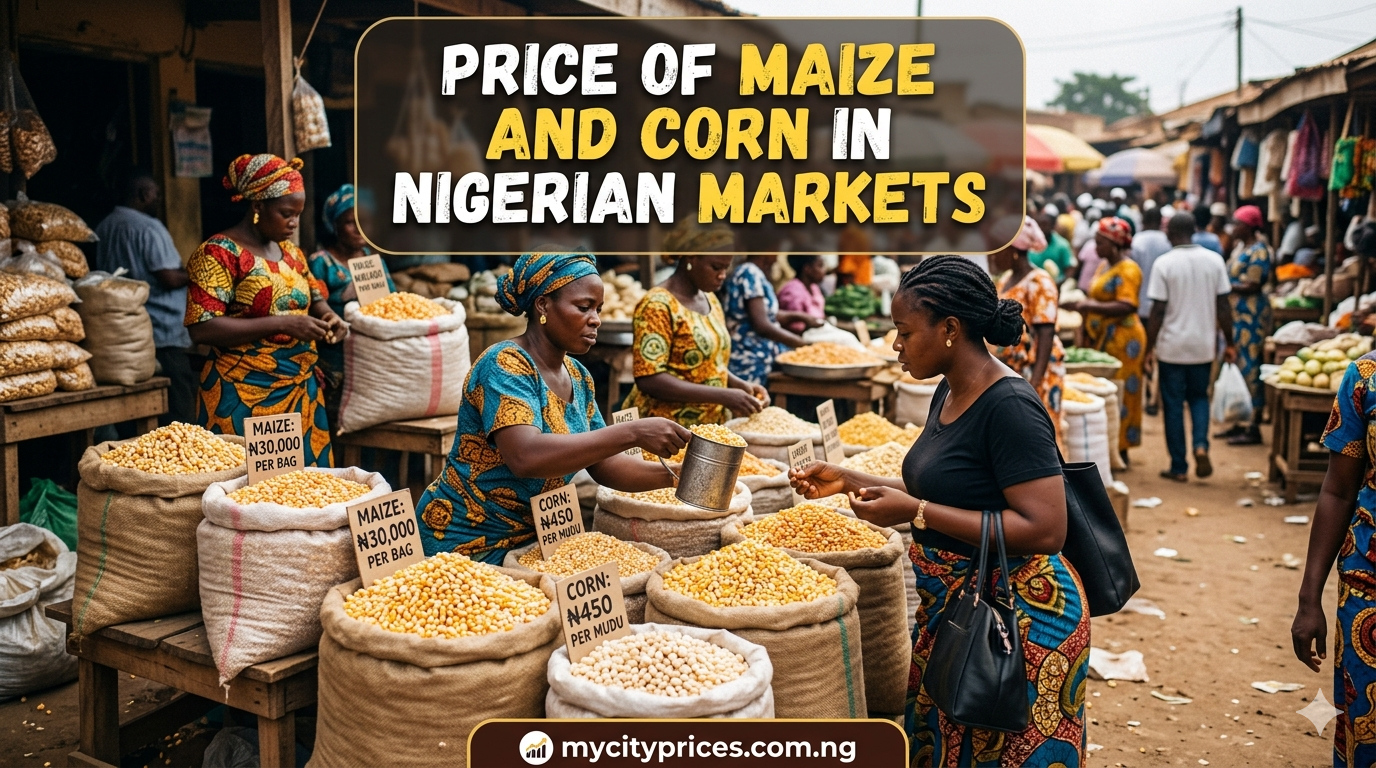
Price of Maize and Corn in Nigerian Markets (2026 Update)
Maize (also known as corn) is one of the most important staple foods in Nigeria. It is used for everything—from pap (ogi) and tuwo to animal feed and industrial processing. Because of this high demand, the price of maize and corn in Nigerian markets changes frequently, depending on season, location, and economic factors.
This guide gives you a realistic breakdown of maize prices across Nigerian markets, based on trader feedback, buyer experiences, and current market trends.
Current Price of Maize in Nigeria (2026)
Prices vary depending on whether you are buying dry maize (grains) or fresh corn (on the cob).
1. Dry Maize (Grains) Price
| Quantity | Price Range |
|---|---|
| Paint bucket (4–5kg) | ₦4,500 – ₦7,000 |
| 25kg bag | ₦28,000 – ₦45,000 |
| 50kg bag | ₦55,000 – ₦80,000 |
💡 In northern markets, prices are usually lower compared to southern cities.
2. Fresh Corn Price (Roasting/Boiling Corn)
| Quantity | Price Range |
|---|---|
| 1 cob | ₦200 – ₦500 |
| 10 cobs | ₦1,500 – ₦4,000 |
| Basket (bulk) | ₦15,000 – ₦35,000 |
📌 During peak season, prices drop significantly.
Price Differences by Location
From real market observations, maize prices differ across regions:
Northern Nigeria (Kano, Kaduna, Jos)
- Cheapest source
- Close to farms
- Lower transport cost
Western Nigeria (Ibadan, Lagos)
- Moderate prices
- Higher demand
Eastern Nigeria (Onitsha, Enugu)
- Slightly higher due to transportation
Regional Price Comparison
| Region | 50kg Maize Price |
|---|---|
| North | ₦55,000 – ₦65,000 |
| West | ₦60,000 – ₦75,000 |
| East | ₦65,000 – ₦80,000 |
👉 This difference is mainly due to logistics and supply chain costs.
Seasonal Price Trends (Very Important)
Maize prices in Nigeria follow a clear yearly pattern.
Harvest Season (August – October)
- Prices drop
- Supply is high
- Best time to buy in bulk
Post-Harvest (November – January)
- Prices remain stable
- Good time for storage
Scarcity Period (March – June)
- Prices rise sharply
- Supply reduces
Seasonal Price Trend Table
| Period | Price Level |
|---|---|
| Harvest | Low |
| Post-Harvest | Moderate |
| Scarcity | High |
💡 Many traders make profit by buying during harvest and selling during scarcity.
Market Analysis: Why Maize Prices Fluctuate
1. Supply and Demand
Maize is used for:
- Human consumption
- Animal feed
- Industrial production
This high demand keeps prices sensitive.
2. Transportation Costs
From trader feedback:
“Once fuel price goes up, maize price follows immediately.”
Since maize is transported from the North:
- Fuel cost affects final price
- Southern markets are more expensive
3. Weather and Farming Conditions
- Flooding can destroy crops
- Drought reduces yield
👉 This directly impacts supply and pricing.
4. Exchange Rate Impact
Although maize is locally produced:
- Fertilizers and farming inputs are imported
- Dollar increase affects production cost
5. Insecurity in Farming Areas
Some farmers reduce production due to:
- Banditry
- Farm access issues
This leads to:
- Lower supply
- Higher prices
VIEW ALSO: What is the current price of fuel in Nigeria?
Price Comparison: Maize vs Other Staple Foods
| Food Item | 50kg Price Range |
|---|---|
| Maize | ₦55,000 – ₦80,000 |
| Rice | ₦70,000 – ₦100,000 |
| Beans | ₦60,000 – ₦90,000 |
👉 Maize is still one of the more affordable staple foods.
Real Buyer Insights (From Market Experience)
From interacting with buyers and small-scale sellers:
- Buying directly from trucks is cheaper
- Prices are negotiable in bulk markets
- Early morning purchases give better deals
One trader mentioned:
“If you wait till afternoon, prices can increase slightly, especially when demand is high.”
Best Places to Buy Cheap Maize in Nigeria
Markets known for lower maize prices:
- Northern grain markets (Kano, Kaduna)
- Bodija Market (Ibadan)
- Mile 12 Market (for fresh corn in Lagos)
- Onitsha Relief Market
💡 Buying from major distribution markets can save 10%–25%.
How to Save Money When Buying Maize
✔️ Buy During Harvest
This is the cheapest period.
✔️ Buy in Bulk
Paint bucket purchases are more expensive per kg.
✔️ Store Properly
Avoid moisture and pests.
✔️ Monitor Prices Weekly
Prices can change quickly.
Storage Tips for Maize
To avoid losses:
- Keep in dry, ventilated space
- Use airtight containers
- Add preservatives (like dried pepper or neem leaves)
- Avoid ground contact
Poor storage can lead to:
- Mold
- Insect infestation
Future Price Outlook (2026)
Based on current trends:
- Prices may remain unstable due to inflation
- Fuel costs will continue to affect transport
- Demand for maize (especially for poultry feed) will keep rising
👉 This means maize prices are likely to stay high or increase gradually.
Final Thoughts
Maize remains one of Nigeria’s most important and relatively affordable food items—but prices are no longer as low as they used to be.
Key Takeaways:
- Current price for 50kg maize: ₦55,000 – ₦80,000
- Cheapest during harvest season
- Northern markets offer better prices
- Transport and fuel heavily affect pricing
If you want to save money, the best strategy is simple: 👉 Buy in bulk during harvest and store properly
FAQs
1. What is the current price of maize in Nigeria?
A 50kg bag costs between ₦55,000 and ₦80,000 depending on location.
2. Why is maize expensive in Nigeria?
Due to transportation costs, inflation, and high demand.
3. When is maize cheapest?
During harvest season (August to October).
4. Where can I buy cheap maize?
Northern markets and bulk distribution markets.
5. Is maize cheaper than rice?
Yes, maize is generally cheaper than rice.
6. How much is a paint bucket of maize?
Between ₦4,500 and ₦7,000.
7. Can maize prices drop?
Yes, especially during harvest periods.
8. Why do prices differ by region?
Due to transportation and supply chain differences.
9. How can I store maize for long?
Keep it dry, sealed, and protected from pests.
10. Is maize farming profitable in Nigeria?
Yes, due to high demand across food and feed industries.

Leave a Reply